Utah Tap Water Guide: What Water Is Like Across the State
Utah tap water can taste and behave very differently from one community to the next. The source may be a mountain reservoir, a deep well, or a blend, and local plumbing can affect what comes out of a particular faucet. This guide explains how to understand those differences, find reliable information about your supply, and decide when a test or treatment system may be useful.
Why Utah Tap Water Varies So Much
There is no single statewide tap-water profile. Utah communities draw water from different sources, use different treatment processes, and manage separate distribution systems. Even neighboring areas may have different suppliers, source mixtures, and water characteristics. A result from one city is not a reliable substitute for information about another.
In general, Utah’s water supplies include surface water, groundwater, and combinations of the two. Surface water comes from sources such as reservoirs and streams. Groundwater is pumped from wells. Some suppliers receive water from a wholesale provider and then deliver it through their own local system. A supplier may also use several sources, switching or blending them as conditions and operational needs change.
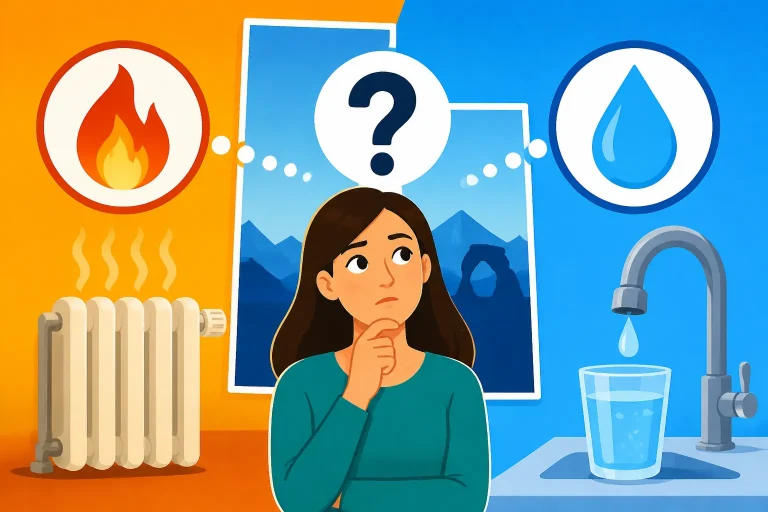
That variety affects more than taste. It can influence mineral content, seasonal changes, treatment choices, and the kinds of monitoring a system performs. It also means that broad claims such as “Utah water is hard” or “mountain water is always softer” are too sweeping to help you make a household decision. The useful question is what your supplier provides at your address, and whether the issue you notice is coming from the supply, your building, or a specific faucet.
Utah’s dry climate and variable water conditions make source management especially important. Snowmelt, reservoir conditions, drought, groundwater levels, and demand can all influence how suppliers operate. A provider may adjust its source mix over time. That does not automatically mean the water is unsafe; it means the best information is local and current. For background on how supplies can change between sources, see Canyons to Deep Wells: How Mountain Runoff and Well Supplies Shift.
The area’s water infrastructure also varies. A municipal system may serve a large population, while a small community system may operate with fewer connections and a different source. Some homes outside a public water service area rely on a private well. Each situation has different monitoring and homeowner responsibilities. The statewide overview in Utah Public Water Systems: Safe Drinking Water Oversight can help explain how public systems fit into the larger picture.
A practical way to think about Utah tap water is to separate three questions:
- Who supplies the water? Your address determines which utility or system is responsible for the public supply.
- What is in that supply? The supplier’s water-quality report and monitoring records describe system-level results.
- What happens inside the property? Household plumbing, fixtures, storage, and treatment equipment can affect water after it enters the building.
Those questions matter because a utility report describes water monitored in its system, not necessarily every faucet in every home. If you live in an apartment, the property may also have shared plumbing or a master meter. If you use a private well, there is no municipal supplier producing an annual report for your household. Identifying the source first avoids spending time or money on the wrong solution.
Where Utah Tap Water Comes From and How It Is Treated
Surface water and groundwater
Surface water can be influenced by seasonal runoff and changing reservoir conditions. Suppliers that use it treat the water before distribution, with treatment needs depending on the source and the system’s design. Groundwater often has a different mineral profile from surface water, but it is not automatically free of contaminants or treatment needs. Naturally occurring minerals and other substances can be present in groundwater, so testing and routine monitoring still matter.
Many Utah systems use a combination of sources. A provider might rely more heavily on one source at certain times and another source at other times. Blending can affect taste or mineral levels, even if the water continues to meet applicable drinking-water standards. It is one reason a taste change does not, by itself, tell you whether water quality has changed in a way that needs action.
If you want to understand the source serving your home, begin with the supplier’s annual report or contact the supplier through its official website. You can also use How to Find Who Supplies Culinary Water to Your Address if you are unsure which provider serves your location. The supplier may be a city, a district, a small community system, or a retailer receiving water from a wholesaler.
Treatment depends on the source
Treatment is designed around the water source and the contaminants or operational concerns that a system needs to manage. Public water systems may use processes such as filtration and disinfection, depending on the source and treatment setup. Groundwater systems may use different treatment or operational controls than systems drawing from surface water. There is no single treatment recipe that applies to every Utah provider.
Disinfection is one part of public water treatment. A disinfectant residual may remain as water travels through pipes, helping the system maintain protection in the distribution network. The amount and type of disinfection used are managed by the provider under applicable requirements. If you notice a chlorine-like smell or taste, that can be related to disinfection, but smell alone cannot confirm whether the water meets standards. For more on this topic, see Utah Tap Water Disinfection and Chlorine Taste Standards.
A supplier may also maintain storage tanks, monitor pressure, flush parts of its distribution network, or make operational changes. Those activities can sometimes affect appearance or taste temporarily. If a change is sudden, persistent, or accompanied by an official notice, check the supplier’s current alerts rather than assuming it is a normal seasonal shift.
Culinary water is not the same as secondary water
In Utah, some properties have access to a separate secondary water supply used for outdoor irrigation. Secondary water is not the same as culinary drinking water and should not be treated as interchangeable with water from a kitchen tap. Do not connect a secondary system to household plumbing unless the connection has been designed and approved with appropriate backflow protection. Cross-connections can create a pathway for water from one system to enter another.
If you are unsure which line serves a hose bib, irrigation system, or indoor fixture, ask the utility or a qualified plumber to help identify it. How Secondary Water Systems Differ From Culinary Water explains the distinction and why keeping systems separate matters.
Taste, Hardness, and Everyday Water Differences
Taste is one of the first things people notice, but it is not a complete measure of water quality. Water can have an earthy, mineral, salty, or disinfectant-like taste for different reasons. Some are related to the source; others may come from treatment, plumbing, or a change in how water is being delivered. A taste difference alone does not identify a contaminant, and a lack of noticeable taste does not prove that water contains none.
Hardness and mineral deposits
Hardness mainly reflects dissolved calcium and magnesium. Hard water can leave spots on glassware, a film on fixtures, or scale in appliances and water heaters. It can also make soap behave differently. These effects can be frustrating, but hardness is not the same thing as a contaminant violation. Whether to install a softener is a household decision based on measured hardness, plumbing needs, maintenance, and personal preference.
Hardness varies across Utah because groundwater and surface-water sources have different mineral profiles. Even within one region, a supplier’s source blend can change the water’s mineral characteristics. Do not rely on a neighbor’s softener setting or a general hardness estimate for your county. Ask your supplier for a current figure or test the water using a method suitable for hardness. Utah Tap Water Taste, Hardness, and Seasonal Differences offers more context on why water can differ by location and season.
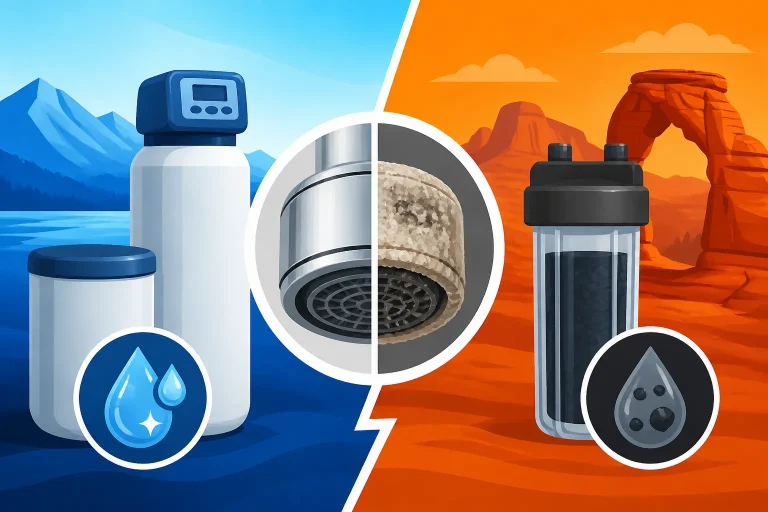
A softener is designed to reduce hardness minerals, not to address every possible water-quality issue. It should not be treated as a general-purpose contaminant filter. Likewise, a carbon filter may improve some tastes or odors but does not necessarily soften water. Choose equipment only after identifying the specific issue and checking the product’s certification for the reduction claim you need.
Chlorine-like, earthy, or unusual odors
A chlorine-like taste or smell may be noticeable in some supplies, but the intensity can differ by source and time. Letting water sit in a clean container may reduce some noticeable chlorine odor, but that is a taste adjustment, not a substitute for investigating a persistent or sudden change. Do not use smell or taste to decide whether an official warning can be ignored.
Earthy or musty odors can have several possible causes, including source-water conditions. A change that affects many homes may be different from an odor limited to one faucet or one building. If the issue is only at one fixture, check whether other taps are affected and whether the fixture or drain could be contributing. For a regional discussion of source-related odors, see What Causes Earthy Odors in Utah Reservoir Drinking Water.
When appearance changes
Clear water is not a guarantee of safety, and cloudy or discolored water does not always indicate a dangerous condition. Air bubbles can make water appear cloudy and then clear as it stands. Rust-colored water can be associated with disturbed sediment or corrosion in pipes. If the change follows nearby utility work, a pressure drop, or a main break, check for a notice from the supplier and follow its instructions.
If discoloration continues, affects multiple taps, or comes with an unusual smell or official advisory, contact the supplier through its official website. If the issue is limited to one tap, a fixture or building plumbing problem may be more likely, but a qualified plumber or the water provider can help you distinguish the possibilities. A faucet aerator can collect sediment, so inspection and cleaning may help with flow or visible particles; it will not establish whether water is safe.
How to Check Your Water Quality and Read Local Results
For a home connected to a public water system, the first place to look is the supplier’s annual water-quality report, often called a Consumer Confidence Report or CCR. It summarizes regulated contaminants detected during the reporting period, monitoring results, and required explanations. A report can help you understand the system’s water, but it is not a test of every faucet in your home.
To find the right report, identify the system serving your exact address. A city name alone may not be enough, especially where service boundaries overlap or a wholesale supplier provides water to a retail system. If you rent, ask the property manager which supplier serves the building, but you can also confirm the service area directly with the provider. Guide to Utah Consumer Confidence Reports and Tap Testing explains how reports and household testing answer different questions.
When you read a report, pay attention to:
- The reporting period. Results describe monitoring from a specific period, not necessarily a sample taken yesterday.
- The system name. Make sure the report belongs to the provider serving your address.
- The source description. Note whether the system uses wells, surface water, purchased water, or a blend.
- Units and benchmarks. Results may be shown in different units. Compare them with the benchmark used in the report, not with an unrelated figure from another source.
- Detected results and non-detects. A non-detect means the substance was not found at or above the method’s reporting level in that sample; it does not always mean absolute zero.
- Explanatory notices. Read any explanation of violations, monitoring limits, health advisories, or corrective actions carefully.
A report is a useful starting point, but it has limits. System sampling is conducted according to monitoring requirements and does not necessarily capture conditions at an individual household tap. Lead is a clear example: lead may enter water from plumbing materials inside or near a property, so results collected elsewhere in the system do not tell you exactly what comes from your faucet. If that is your concern, review Lead and Copper in Utah Municipal Tap Water: New Rules and consider whether a properly collected tap sample is appropriate.
Also distinguish between a standard, a detection, and a health-based recommendation. A detected substance does not automatically mean the system is out of compliance. Conversely, a report that meets system requirements does not answer every question about a particular home’s plumbing or an unregulated substance. If you need help interpreting a result, contact the supplier or a certified drinking-water laboratory. For health concerns about a particular exposure, ask your local health department or a medical professional.
Public systems may make additional monitoring information available beyond the annual report. Utah’s Waterlink tools can help users locate some system information and records. The article How to Look Up Utah Public Water Monitoring Records on Waterlink explains how to use monitoring records as a supplement to the supplier’s report. For older reports, ask the provider where it makes past reports available; Accessing Back Issues of Municipal Drinking Water Reports covers that task.
Private Wells, Home Plumbing, and Treatment Choices
Public supply and private well responsibilities differ
A home connected to a public supplier generally receives water monitored by that system under public drinking-water requirements. A private well is different: the homeowner is usually responsible for arranging appropriate sampling and maintaining the well. Private wells do not receive the same kind of utility CCR for each home, and nearby public-system results cannot establish the quality of a private well.
If you are not sure whether your home is on a public supply or a private well, check property records, ask the seller or landlord, or contact the local utility. A shared well may have a separate arrangement and may be subject to different requirements depending on how it serves people. Is Your Water From a City Utility or a Private Source? can help you work through the distinction.
For a private well, testing should be planned around the well’s setting, construction, potential nearby hazards, local recommendations, and any change in water quality. A certified laboratory can advise on sample bottles and collection instructions. Do not assume that a home test strip can detect every contaminant or replace laboratory analysis. Utah Well Water Sampling: How to Collect, Chill, and Ship explains why proper collection and handling affect results.
Plumbing can change water after it enters the home
Water may travel through a service line, building pipes, fittings, faucets, and appliances before it reaches a glass. The material and condition of those components can influence water quality. Older plumbing can contain materials of concern, and water that has remained standing in pipes may differ from water drawn after flushing. A building-level issue can affect one home even when a neighborhood’s supply is operating normally.
If a concern involves lead, do not rely on a visual inspection or the age of the building alone to establish what is in the water. Identify the service-line material where possible and use appropriate testing when needed. A test should follow the laboratory’s collection instructions, since sampling method and timing can affect the result. Testing Lead at Customer Taps in Utah Water Systems provides more detail on tap sampling.
Other plumbing problems can affect taste, odor, flow, or visible particles. A rusty fixture, clogged aerator, corroded fitting, or water heater issue may create symptoms limited to a particular location. Compare several cold-water taps and note whether the issue appears in hot water, cold water, or both. That observation can help a plumber or supplier narrow down the source.
Match treatment to a measured need
A treatment system is not automatically necessary just because water tastes different or leaves mineral spots. First define the problem: hardness, a specific contaminant, chlorine taste, sediment, or another measurable issue. Then compare the test result with the treatment device’s certified performance claim and maintenance requirements.
A useful decision sequence is:
- Identify the source and supplier. Confirm whether the property uses public water, a private well, or more than one water line.
- Check local information. Review the current report, supplier notices, and any available monitoring records.
- Describe the problem precisely. Note where it occurs, when it began, and whether neighbors or other taps are affected.
- Test when needed. Use a qualified laboratory for questions that require reliable contaminant data.
- Choose treatment for the result. Verify the exact contaminant reduction claim and certification, then plan for installation and maintenance.
- Retest when appropriate. Follow the product instructions and test the treated water if confirmation is important.
Different technologies address different concerns. A water softener is intended to reduce hardness; activated carbon can reduce certain substances when the device is certified for them; reverse osmosis can reduce certain dissolved substances depending on system design and certification; and disinfection technologies are used for microbial concerns when properly selected and maintained. None should be assumed to handle all contaminants. Check the product’s certification against your test results, and ask a qualified water-treatment professional or laboratory if you need help matching a device to a specific result.
Treatment equipment also adds upkeep. Filters need replacement according to their instructions and capacity, and systems can perform poorly if installed or maintained incorrectly. A device that reduces a contaminant at one faucet may not address water at other taps. Whole-house treatment is not always necessary for a drinking-water concern, and a point-of-use device may not be suitable for an issue that affects all household water. The right setup depends on the result, the plumbing, and the intended use.
What to Do When Water Changes or an Advisory Is Issued
A sudden change deserves a different response from a long-standing mineral taste. Start by checking whether the issue is limited to one fixture, one building, or a wider area. Then look for current notices from the water supplier using its official website. If the supplier has issued an advisory, follow its instructions rather than relying on general advice or a neighbor’s interpretation.
Water interruptions and pressure drops can occur during repairs, power interruptions, equipment problems, or main breaks. A loss of pressure is important to report because it can affect system operations and may prompt the supplier to issue guidance. Contact the provider through its official website if you see a significant pressure change or an outage that has not been explained. Low Water Pressure: Is It Just Your House or the Neighborhood can help you assess whether the problem appears local or broader.
Different notices mean different things. A boil-water advisory is not interchangeable with a notice about a chemical contaminant, an outage, or a “do not use” instruction. Boiling is not an all-purpose treatment and does not remove metals or many chemical contaminants. Follow the specific instructions in the notice, including any directions about drinking, cooking, brushing teeth, or using water for children or medically vulnerable people. If the notice is unclear, ask the supplier or local health department.
If water is discolored after a pressure event, do not assume that flushing is always appropriate. The supplier may provide specific directions about whether to wait, run a tap, or avoid using water. Instructions can depend on the cause and location of the event. See Brown Tap Water After a Pressure Drop: When to Flush and When to Wait for more on this situation.
If an advisory has been lifted, use the supplier’s official notice to confirm the status and follow any steps it gives for returning to normal use. Notices may be distributed through several channels, and renters or people who do not receive a utility bill may miss direct messages. Ask the property manager how alerts are passed along and check the supplier’s notice page during an active incident. How Utah Renters Can Track Boil-Water Notices and Safe Lifts covers ways renters can keep up with advisories.
For an unusual smell, color, or taste without a notice, contact the supplier if the change is sudden, widespread, or persistent. If it affects only one fixture, inspect the aerator and consider whether the building plumbing or appliance could be involved. Do not use a home test strip as the sole basis for deciding that an official advisory is unnecessary. If anyone has a health concern related to water, contact the local health department or a medical professional.
Frequently Asked Questions
Is Utah tap water safe to drink?
Many Utah residents receive water from public systems that monitor and treat their supplies under drinking-water requirements. Conditions and results vary by system, however, and a statewide generalization cannot answer a question about a specific address. Check the report and notices for the supplier serving your home. For health concerns or a specific exposure question, contact the local health department or a medical professional.
Does all Utah tap water come from mountain snowmelt?
No. Utah suppliers use different sources, including surface water, groundwater, and purchased or blended supplies. The mix depends on the system and may change. Check your supplier’s report or contact the provider to learn what sources serve your address.
Is hard water unsafe?
Hardness refers mainly to minerals such as calcium and magnesium. It can cause scale and affect soap performance, but hardness by itself is not the same as a drinking-water contaminant violation. If you are considering a softener, get a reliable hardness measurement and select equipment for that specific purpose.
Should I install a filter because my water tastes different?
Not necessarily. Taste can change for several reasons, and a filter only helps with substances it is designed and certified to reduce. First identify the supplier and determine whether the change is sudden, local, or associated with a notice. If a contaminant is the concern, use appropriate test results to choose treatment.
How do I find the water report for my home?
Identify the supplier for your exact address, then look for its current Consumer Confidence Report on the supplier’s official website. If you are unsure who serves the property, ask the local utility or use Finding Your Utah Culinary Water Provider on Waterlink. A private well does not have a public supplier’s CCR; the well owner needs to arrange appropriate testing.
Disclaimer
This article is for general informational purposes only and does not constitute professional advice. Laws, prices and regulations vary by location and change over time. Consult a qualified professional for guidance on your specific situation. Utah Water Central is not a government agency or water utility and is not affiliated with any public water system.